
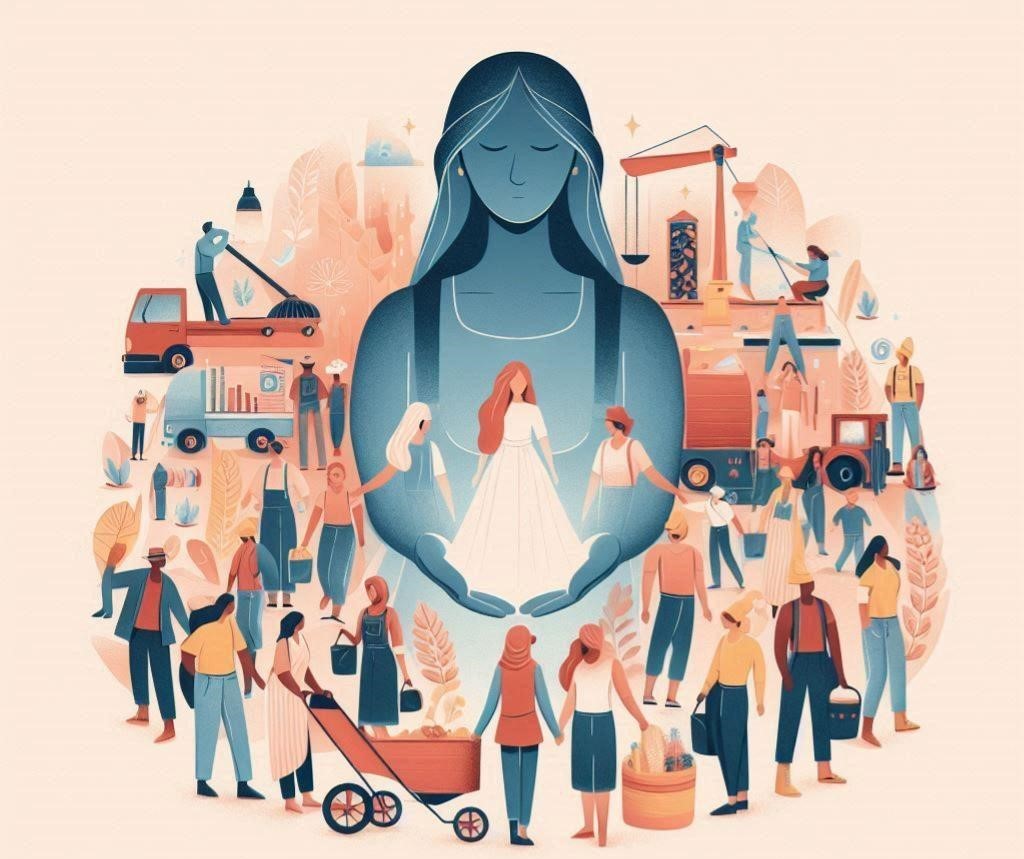
Picture this: a man, holding up the world with a look of grim determination on his face, while a woman quietly braces him from underneath. Now, I don’t know about you, but if this doesn’t capture the reality of household dynamics in an uncomfortably accurate way, I don’t know what does! The “world” here might as well be taxes, car repairs, and heavy lifting, while the woman also working her own endless to do list holds it all together without a second thought. Let’s break this down and rethink what “equality” actually looks like in our day-to-day lives.
The Mystery of Unseen Labor (a.k.a. “Who Loaded the Dishwasher?”)
If the term “invisible labor” is new to you, consider this your initiation. Invisible labor includes all those little household tasks that magically get done but rarely get recognized. Have you ever walked into a perfectly clean kitchen and thought, Wow, who cleaned the stove, watered the plants, and wiped down every single countertop? Probably not. And that’s the beauty and tragedy of unseen labor. Women have often been the unsung heroes here, doing things nobody notices until they don’t get done. So, next time you see an empty toilet paper roll that somehow replenished itself, say “thank you” to the ghostly household spirit (hint: it’s probably your partner).
Shared Responsibility: “You Do Dishes, I’ll Fold Laundry”
Imagine a world where both partners evenly split up the household chores. I know, revolutionary, right? It’s not just about taking turns doing the dishes (although that’s a good start). True equality means sharing the load on both visible and invisible fronts. When both partners are pitching in, everyone gets a little breathing room, and nobody’s silently tallying up who emptied the trash more this week. Shared responsibility means less resentment, fewer “reminder notes” taped to the fridge, and possibly more time for Netflix marathons.
Breaking Down Stereotypes: “Yes, Men Can Also Handle Grocery Lists”
Let’s talk stereotypes. Traditionally, society has handed men the “worldly responsibilities” and women the “domestic duties.” In reality, this division isn’t doing anyone any favors. Breaking down these old tropes means saying, “Yes, men can remember the grocery list!” and “Women can manage taxes just fine!” Strength and caregiving are universal human qualities, not exclusive to any gender. Let’s normalize that everybody should know where the spare light bulbs are kept, just like everybody should know how to file taxes without panic.
Putting Value on Domestic Work (It’s More Than Just “Helping Out”)
Think about the last time someone said, “Oh, he helps with the kids.” Sounds nice, right? But why does it sound like a bonus or a favor? Domestic work like caring for children or managing the household is real, hard work, not just a side project. It’s time to start valuing this labor as much as we value any other job, and that means rethinking our language around it. Taking care of a home is everyone’s responsibility, not a kindness extended by one partner to the other.
Empowerment and Balance: “One Chore List to Rule Them All”
Imagine an organized household where everything is balanced—maybe even a chore chart where everyone has a fair share of tasks! Gender equality should give everyone the chance to balance personal and professional responsibilities without guilt or stress. That means more time for the things you actually enjoy, like relaxing after a long day without mentally listing tomorrow’s tasks. True equality empowers everyone to be a little happier, a little freer, and a lot less exhausted.
Policy and Culture: “Yes, Men Can Take Parental Leave Too!”
For real change, we need shifts not only at home but in society too. Policies like parental leave, affordable childcare, and flexible work arrangements can go a long way in making equal responsibility at home achievable. And let’s be honest when everyone is on board, it just makes life easier. Imagine a world where both parents can take time off, where the office doesn’t expect you to be available at all hours, and where flexible work arrangements are the norm.
So, let’s stop pretending that gender equality is just about who makes more money or who takes out the trash. It’s about all the things, big and small, that keep our lives running smoothly. And if that means making a chore chart and sticking to it, well, maybe that’s a small price to pay for a little peace of mind (and a clean kitchen). equality and the need to recognize and address the structural expectations placed on both men and women.

 Louma Albik
Leave a comment